
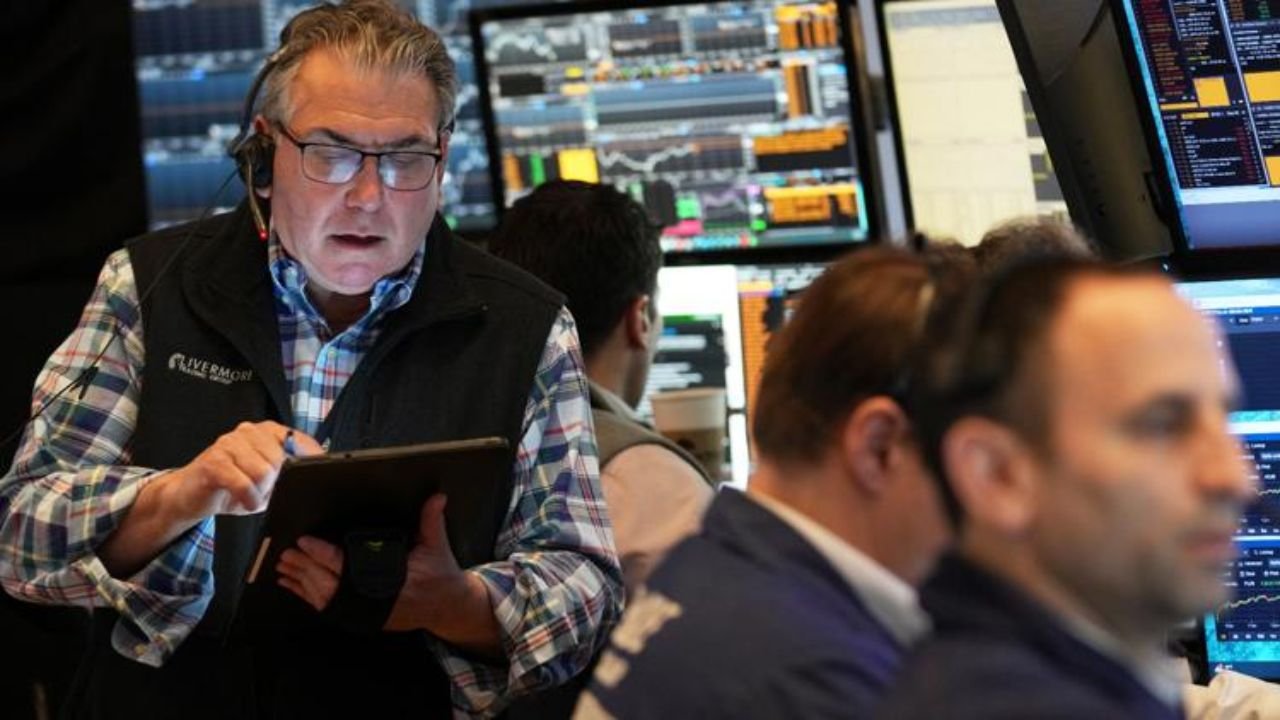
New York News of Tuesday shook the world financial markets once again. The investors rejuvenated the Sell America approach and dumped US stocks, bonds and dollar. This is primarily attributed to the growing conflict between President Donald Trump and European leaders regarding the ownership of the Greenland island. This political unrest has raised the concern among investors how economic and trade relationship between the US and Europe may further flounder in the next few days, which will directly affect global markets.
A Day of Heavy Losses on Wall Street
Tuesday was a bad Wall Street day. Dow Jons industrial average diminished by 1.76 percent by 871. The S&P 500 index was down 2.06% and the Nasdaq Composite, which is mainly comprised of tech companies, dropped by a significant margin of 2.39%. It is interesting to note that, the S& P 500 and the Nasdaq wiped all their 2026 gains in a day. It was the worst day in all three indices, the Dow, the S and P, and the Nasdaq since October 10 th when Trump threatened to raise tariffs on imports originating in China.
Dollar Weakness and Euro Strength
It was not just the stock market making a huge movement, the currency market as well witnessed a lot of movement. The dollar index, used to assess the strength of dollar against six major currencies, decreased by 0.8% on Tuesday. This can be taken as an important currency market move. This was the worst day of the dollar index since August. On the other hand, the euro appreciated by 0.65 percent against dollar. Analysts reckon that this weakness in the dollar is a clear sign that international investors have lost faith in US investments as they used to have.
Bond Yields Rise and Investor Concerns
The US bond market was also making definite signs of discomfort. The 10-year yield on the US treasury increased to 4.29 and the 30-year Treasury yield increased to 4.92. It was the highest level in both levels since September. This means that the prices of bonds and their yield vary in opposite directions; therefore, an increase in the yield implies that people are selling bonds. Krishna Guha, vice chairman of Evercore ISI said this was a part of a larger global risk-off environment in which investors are looking to lower their exposure to the unstable and unpredictable US marketplace.
Gold and Silver Shine, Crypto Slips
As stocks, bonds, and the dollar came under pressure, investors sought safe havens. Gold and silver saw significant gains. Gold futures climbed 3.6% to a record high above $4,750 per troy ounce. Silver futures surged even more, rising 6.3% to levels above $95 per troy ounce. In contrast, Bitcoin weakened, falling nearly 3.9% in 24 hours to below $90,000.
New Concerns from Asia: Japan’s Political Shock
Amidst the tensions in the US and Europe, news from Asia also added to market concerns. The sudden announcement of elections in Japan rattled its bond market. Prime Minister Sanae Takaichi’s proposal for a temporary tax cut on food items, despite the country’s massive government debt, worried investors. As a result, Japanese bond yields rose sharply. This turmoil also impacted global bond markets, further increasing investor anxiety.
The Fear Gauge: VIX Surges
The VIX index, also known as the “fear gauge,” which measures market volatility, surged 28% on Tuesday. This was its biggest one-day jump since October. The VIX surged above the 20 level, which is generally considered a sign of increased volatility. Simultaneously, CNN’s Fear & Greed Index slipped from “Greed” to the “Neutral” zone, indicating that investors have become more cautious.
Trump’s Tariff Threat and Tensions with Europe
A major factor behind this development is President Trump’s new tariff threat. On Sunday, he threatened to impose a new 10% tariff on imports from eight European countries, including Denmark, the United Kingdom, and France. This threat came as he was pressing the US claim on Greenland. Since US markets were closed on Monday for Martin Luther King Jr. Day, investors had their first opportunity to react to these weekend developments on Tuesday.
Questions about the Fed’s Independence and the Dollar
Market concerns are not limited to tariffs. Questions are also being raised about the independence of the Federal Reserve. Delays in appointing a new Fed chair and reports of an investigation into current chair Jerome Powell have further unnerved investors. Analysts believe that if political pressure on the Fed’s policy independence increases, it could impact the credibility of the dollar.
European Market Reaction
European markets also came under pressure. The Stoxx 600 index, which tracks stocks across the region, closed down 0.7% on Tuesday, following a 1.19% drop on Monday, its worst day since November. However, Denmark’s OMX Copenhagen 20 index rose 1.13% on Tuesday, after a sharp 2.73% decline the previous day. This shows that the Greenland dispute is having varying effects on regional markets.
What’s Next? Uncertainty for InvestorsA Period of Uncertainty
Experts believe the coming days will be marked by a “anything can happen” scenario. Investors are trying to understand where this tension between the US and Europe will lead. Some hope the US Supreme Court might block Trump’s authority to impose tariffs under emergency powers, providing relief to the markets. Others believe Trump might change his stance at the last minute, as he has done before.
Conclusion: Rising Politics, Shaky Markets
In general, the Greenland conflict and tariff threats have once again shown how delicate the global markets are. Investor anxiety is bound to occur when there is a collision between politics and economics. The market is at present in a risk aversive mood and there is an increasing tendency towards safe-haven investment. Though the US markets are not too far below their all time highs despite the recent decline, the uncertainty that has been experienced in the recent past may render the days that lie ahead even more difficult to investors.
FAQs
Q1. Why did US stock markets fall sharply?
US markets dropped due to renewed geopolitical tensions between the United States and Europe, especially linked to President Trump’s comments on Greenland and new tariff threats.
Q2. What does the “Sell America” trade mean?
It refers to investors selling US assets such as stocks, bonds, and the dollar when confidence in the US economy or political stability weakens.
Q3. Why did gold and silver rise during the market sell-off?
Investors typically move money into safe-haven assets like gold and silver during periods of uncertainty and market volatility.
Q4. How did currency markets react to the turmoil?
The US dollar weakened significantly, while the euro strengthened as global investors reduced exposure to US assets.
Q5. Are markets expected to remain volatile?
Yes, ongoing trade tensions, political uncertainty, and upcoming legal decisions on tariffs suggest continued market volatility.
